
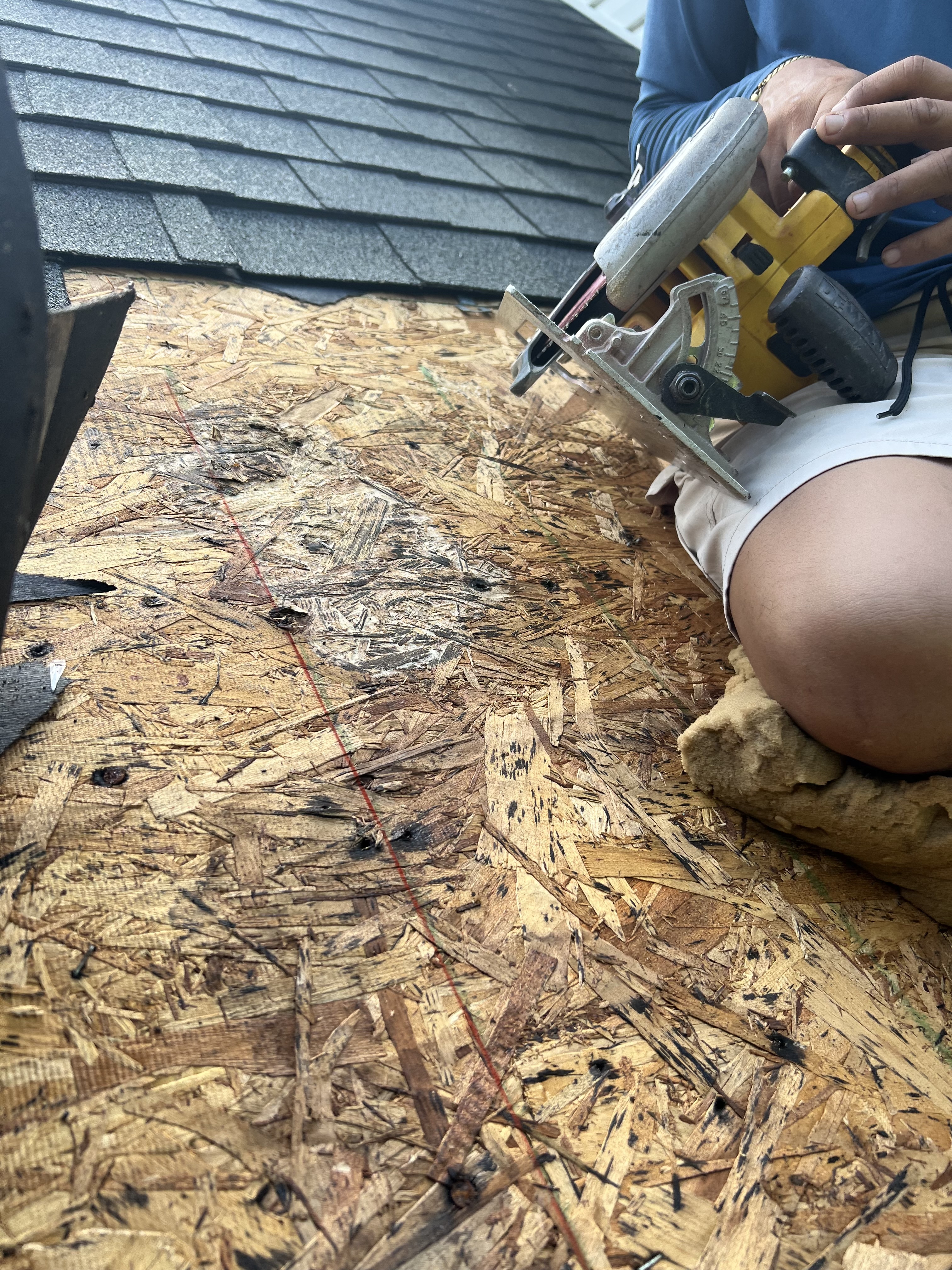

If you’ve lived in East Tennessee long enough, you know how summer weather works here. We can have weeks of fairly normal rain, then a line of storms rolls through with real wind behind it. Suddenly, there’s water showing up in a ceiling or attic in a spot that’s never leaked before.
So what changed?
Keith, our project manager at Alpine Restoration, sees this regularly. His experience is that it often isn’t a case of something suddenly breaking during that one storm. Instead, the roof already had a weak point that normal rainfall hadn’t exposed. Wind-driven rain finally found it.
What Wind-Driven Rain Can Reveal
Most roofing systems are designed to shed water downward. During a strong East Tennessee storm, however, wind can push rain sideways and sometimes upward into areas that normally stay dry.
Here are four places we’re frequently checking when a homeowner reports a new leak after a storm:
1. Flashing
Flashing protects some of the most vulnerable areas of a roof, including transitions, walls, chimneys and other penetrations.
Over time, flashing can corrode, shift or develop small openings. Those areas may handle ordinary rainfall without a noticeable problem, but wind-driven rain can push water underneath an edge that normally sheds water just fine.
2. Older Gutter Spike Hangers
Older gutter systems were commonly installed using long gutter spikes rather than the hidden hangers more commonly used today.
As the years pass, those spikes can begin working loose. During a heavy storm, additional water and debris can put even more weight on the gutter. A gutter that pulls away from the fascia or no longer sits at the proper angle can allow water to end up where it doesn’t belong.
3. Missing or Undersized Drip Edge
Drip edge is installed along the edges of the roof to help direct water away from the roof decking and fascia and into the gutter system.
If it’s missing, improperly installed or undersized for the application, wind can push water back underneath the shingle edge rather than allowing it to drain cleanly away from the structure.
4. Ridge Vent Problems
We also inspect the ridge vent at the peak of the roof.
A ridge vent needs to be properly secured to the structure beneath it. If it has loosened or wasn’t fastened correctly, strong winds can create an opportunity for rain to enter near the highest point of the roof.
A New Leak Doesn’t Automatically Mean You Need a New Roof
Every roof is different, and the source of a leak isn’t always obvious from the ground—or even from where the water appears inside the house. Water can travel along decking, rafters and other building materials before it finally becomes visible.
Sometimes the solution is a targeted roof leak repair. Other times, a storm exposes deterioration or installation problems that point to a larger issue.
The important thing is figuring out which situation you’re dealing with.
If water has appeared somewhere new after a recent East Tennessee storm, it’s worth having the roof inspected before the next storm finds the same weak point.
Alpine Restoration provides roof inspections, roof repairs and roof replacement throughout Knoxville, Maryville, Alcoa and surrounding East Tennessee communities. If you’re concerned about a new leak or storm-related roof problem, contact us to schedule an inspection.
